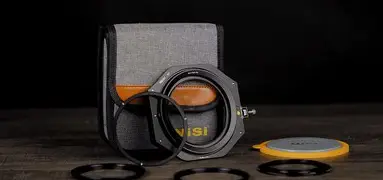
The Real Truth: Dji Osmo 360 or Nisi V7 Filter Kit?
Introduction
Photographers and videographers often face choices that are not apples-to-apples: a camera system designed for immersive capture versus a precision filter kit built to refine the images produced by traditional lenses. The Dji Osmo 360 and the Nisi V7 Filter Kit represent two very different approaches to solving photographic problems. One promises new framing possibilities and immersive video; the other promises greater control over exposure, reflections, and motion blur for conventional lenses. This article examines both products in depth, discusses real-world use cases and buyer priorities, and offers guidance on which tool makes sense depending on the creative goals and workflow.
Overview: Two Tools, Two Purposes
At a high level, the Dji Osmo 360 (part of DJI’s family of compact, stabilised capture devices) targets users who want to record immersive 360-degree video and photos with minimal setup and strong stabilization. The NiSi V7 Filter Kit (a modular filter holder and optical filter set from NiSi) targets photographers who want precise control over light entering standard lenses—particularly landscape, architecture, and long-exposure photographers.
Comparing them directly as competing products misses the point: this is a decision about priorities. Is the aim to capture every angle in a single take and stitch into immersive media, or is the need to manage highlights, control reflections, and enable multi-stop long exposures for rich, high-dynamic-range stills and controlled motion video? The answers determine which product is “right.”
Detailed Product Analysis
Dji Osmo 360 — What it offers
The Dji Osmo 360 is positioned for creators who value convenience, stabilization, and immersive output. It is designed to capture a full spherical field of view in a single recording session, reducing the need for multiple camera setups or complex multi-camera rigs. Key strengths typically include compact form factor, integrated stabilization algorithms, automated stitching software or simplified export workflow for 360-degree assets, and features that cater to travel, real estate, virtual tours, and social media content.
Real-world use cases often include travel vloggers documenting scenes without missing peripheral action, real estate agents producing virtual walkthroughs, event recorders capturing an entire environment at once, and immersive content creators producing footage for VR or 360 video platforms. For many, the appeal is speed: set up, record, and offload a file that can be processed into an immersive experience without requiring multi-camera synchronization.
Nisi V7 Filter Kit — What it offers
The NiSi V7 Filter Kit is focused on optical control. As a modular filter holder system, it allows photographers to attach square or rectangular neutral density (ND) filters, graduated NDs, and polarizers in front of a conventional camera lens. The advantages are precise control over exposure, reflection and glare reduction, and the ability to create long-exposure effects such as silky water, motion blur in clouds, or balanced exposures across a bright sky and darker foreground.
Shop the latest Cameras & Photography picks on Amazon.
View Offers →In everyday usage, landscape photographers rely on filter kits like the V7 for sunrise and sunset scenes, architectural shooters use polarizers and grads to manage reflections and sky contrast, and cinematographers sometimes employ ND filters to maintain cinematic shutter angles in bright conditions. Unlike an all-in-one 360 camera, a filter kit becomes part of a broader toolkit: it requires compatible lenses, familiarity with exposure calculations, and a willingness to carry additional glass and holders into the field.
Pros & Cons
Dji Osmo 360 — Pros & Cons
- Pros:
- Immersive capture: Records a full 360-degree field of view in one take, enabling VR and interactive viewing experiences.
- Compact and integrated: Designed for easy transport and quick setup compared to multi-camera rigs.
- Stabilization and software workflow: Often includes built-in stabilization and streamlined stitching/export tools that reduce post-production complexity.
- Great for single-operator shoots: Captures entire scenes without repositioning, useful for events and real estate.
- Cons:
- Specific output: 360 footage requires a compatible delivery platform and specialized editing skills; not every project benefits from spherical video.
- Lower control over shallow depth-of-field: 360 cameras are optimized for wide angle capture, limiting creative background blur typical of traditional lenses.
- File sizes and workflow: High-resolution spherical video generates large files and can demand significant storage and processing power.
- Limited lens-level control: Filters and lens adapters are generally not applicable, meaning no built-in ND or polarizer options for conventional exposures.
Nisi V7 Filter Kit — Pros & Cons
- Pros:
- Precise exposure control: ND filters enable long exposures and motion effects without changing aperture or ISO.
- Dynamic range management: Graduated NDs help balance bright skies with darker foregrounds for a more even exposure.
- Reflection reduction: Polarizers included in the kit can reduce unwanted glare from water and glass while enhancing color saturation.
- Modularity and optical quality: High-quality glass and a flexible holder system accommodate a variety of lenses and shooting scenarios.
- Cons:
- Added bulk and setup time: Mounting filters and composing with holders is slower than a point-and-shoot experience.
- Compatibility considerations: Must match the holder and adapter rings to lenses; wide-angle lenses can suffer vignetting with stacked filters.
- Learning curve: Effective use of graduated filters and stacking requires practice and sometimes multiple exposures/blending techniques.
- Not applicable for 360 capture: Filter kits are designed for conventional lens systems and do not translate to spherical cameras without custom solutions.
Comparison Table
| Feature | Dji Osmo 360 | NiSi V7 Filter Kit |
|---|---|---|
| Primary Purpose | Immersive 360° capture for video and photos | Optical light control for conventional lenses (ND, CPL, grads) |
| Best For | VR, real estate tours, travel vlogs, immersive storytelling | Landscape, architecture, long-exposure stills, controlled cinematography |
| Image Control | Limited lens-level control; software-based corrections | High control over exposure, reflections, and dynamic range |
| Portability | Very portable; single device | Moderate; additional holders, filters, and adapter rings increase kit size |
| Workflow Complexity | Specialized stitching/editing for 360 content | Conventional RAW workflow, plus possible blending for grads/long exposures |
| Learning Curve | Quick to start; mastering spherical composition takes time | Moderate to steep for precise filter use and stacking techniques |
| Compatibility | Self-contained; compatible with 360 software ecosystems | Dependent on lens thread sizes and holder adapters |
Real-World Buyer Concerns and Use Cases
Buyers typically evaluate decisions based on creative goals, budget, and workflow constraints. Below are realistic scenarios that clarify when each product shines.
Travel and Adventure Creators
For creators who want to capture the environment in an unobtrusive way—mounting a single device on a helmet, kayak, or backpack strap and getting immersive footage—the Dji Osmo 360 is often the natural choice. It captures moments where repositioning to capture multiple angles is impractical. The trade-off is that selective control (e.g., removing reflections or creating long water-blur exposures) is limited.
Landscape Photographers and Fine-Art Shooters
For those who prioritize image fidelity and creative control—capturing a dramatic seascape at dawn with a multi-stop ND to render water silky smooth, or using a graduated ND to keep a bright sky and a dark foreground in balance—the NiSi V7 Filter Kit is the essential tool. It integrates into an established lens-based workflow and delivers effects that are difficult to replicate in post without loss of quality.
Real Estate and Virtual Tours
Real estate professionals who need immersive, interactive presentations of properties benefit from a compact 360 camera that captures full-room context in a single shot. The Dji Osmo 360 speeds up capture and reduces the need for stitching many handheld panoramic shots. Filters are rarely helpful in this context because the wide field of view and intent (accurate representation) do not align with graded exposure manipulation.
Event and Documentary Work
360 capture can be compelling for events where audience immersion is valuable. However, documentary and event shooters who need precise control over lighting, shallow depth, or cinematic look may still prefer traditional cameras with filter kits and fast lenses. Many documentary workflows include both approaches: 360 for immersive cutaways and conventional cameras with filters for controlled, narrative-driven shots.
Find top-rated Cameras & Photography products at great prices.
See Deals →Buying Guide: How to Choose
Choosing between the Dji Osmo 360 and the NiSi V7 Filter Kit should begin with the core question: what does the buyer intend to create? The following checklist helps clarify decision factors.
1. Define the Primary Output
- If the primary output is immersive video or spherical photos for VR or interactive platforms, a 360 camera is the sensible starting point.
- If the primary output is high-quality stills or conventional video that require precise exposure control, a filter kit combined with a traditional camera is the natural choice.
2. Consider Workflow and Post-Production
- 360 footage requires stitching, different editing tools, and larger storage and processing resources.
- Filter-based captures are integrated into standard RAW workflows and often require blending or multiple exposures only for complex scenes.
3. Evaluate Portability vs. Versatility
- 360 cameras are typically compact and quick to deploy; the trade is less control at the optical level.
- Filter kits increase equipment load and setup time but unlock creative techniques that cannot be fully replicated in software.
4. Lens Compatibility and System Investment
- For the NiSi V7, verify lens rings and adapter options to avoid vignetting on wide-angle lenses; ensure the holder supports the lenses intended for use.
- For the 360 camera, confirm that the device integrates with the user’s editing platform and that capture resolution meets the intended distribution medium.
5. Budget and Long-Term Value
- Consider the broader ecosystem: a filter kit is an investment that benefits multiple lenses and can last years, whereas a camera purchase is a single device that may be replaced as sensor and processing tech advance.
- Factor in accessories: spare batteries and storage for 360 work; extra adapter rings, protective cases, and spare filters for the filter kit.
6. Try Before Committing
- If possible, test a 360 workflow on a short project or rent a filter kit for a landscape trip. Seeing the post-production demands and final output quality in context helps make a clearer choice.
Practical Tips and Best Practices
For those who already own one and are curious about integrating the other, here are practical tips:
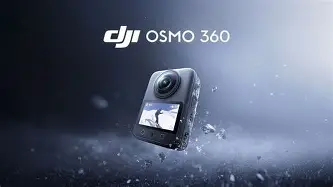
- If purchasing the Dji Osmo 360, invest in a fast memory card and a reliable backup solution; processing 360 footage can be storage-intensive.
- When adopting the NiSi V7, practice mounting and aligning graduated filters in the field—small misalignments can create unnatural transitions in the sky.
- Consider a hybrid approach for content creators: use a 360 camera for atmosphere and environmental shots, and a conventional camera with filters for highlighted hero images that require fine tonal control.
- Read and follow cleaning instructions for optical glass in filter kits—oils, fingerprints, and scratches are more visible with long exposures and wide apertures.
Conclusion
The “real truth” is that neither the Dji Osmo 360 nor the NiSi V7 Filter Kit is universally better—the correct choice depends entirely on the creative objectives and typical shooting scenarios. The Dji Osmo 360 empowers creators to capture entire environments quickly and produce immersive content that engages viewers differently than traditional footage. The NiSi V7 Filter Kit empowers photographers to shape light at the lens, enabling long exposures, reflection control, and balanced dynamic range that result in refined stills and controlled cinematic video.
For travel vloggers, real estate professionals, and creators focused on immersive experiences, a 360 camera is a compelling tool. For landscape and architecture photographers, as well as videographers aiming for precise exposure control and long-exposure aesthetics, a high-quality filter kit remains indispensable. Many professionals find value in both: using 360 capture to complement a primary lens-based workflow rather than replace it. Assess the intended output, workflow readiness, and practical constraints—those answers will reveal which tool belongs in the bag.