Downshifter 13 Running Shoe Review: Real User Experience After 3 Months
When I first walked into the store three months ago, I wasn’t looking for a high-performance marathon shoe or a carbon-plated speed demon. I was looking for a workhorse. As someone who tries to balance a busy professional life with a consistent five-day-a-week running habit, I needed something that could handle my morning three-milers on the pavement and still look decent enough if I had to wear them to a casual coffee meeting afterward. That is how I ended up with the Downshifter 13. I’ve lived in these shoes for ninety days now, totaling just over 180 miles on the odometer, and I have some very specific thoughts on where they shine and where they start to show their budget-friendly seams.
The First Impression: Out of the Box and Onto the Feet
My initial reaction when I pulled the Downshifter 13 out of the box was that it felt surprisingly light for a shoe that doesn't market itself as "ultralight." In my experience, entry-level running shoes often feel a bit clunky or overly stiff because they use denser, cheaper foams. However, the first time I laced these up, I noticed right away that the upper material felt significantly more refined than the previous version I had tried in the past. What I found was a mesh that felt breathable but held its shape without being rigid.
The "Electronics" category might seem like an odd place for a shoe review, but as someone who tracks every single biometric and GPS data point on my wearable devices, I view my footwear as the literal interface between my body and the data I'm trying to optimize. If the shoe is off, my cadence is off, my heart rate spikes from inefficient striking, and my recovery metrics suffer. After testing for three months, I've realized that the Downshifter 13 plays a unique role in this data-driven fitness ecosystem: it is the reliable, no-frills hardware that supports the software of my training plan.
Midsole Performance: The Heart of the Experience
The most critical part of any running shoe is the midsole, and with the Downshifter 13, I was surprised by the balance they managed to strike. It uses a full-length foam that I’ve found to be moderately firm. If you are coming from a "maximalist" shoe with two inches of marshmallow-soft foam, these will feel like a shock to your system. But after using this for a few weeks, I began to appreciate the feedback. I noticed that I could actually feel the ground, which helped me correct my foot strike when I started to get lazy during the final mile of a long run.
One thing that bothered me initially was the break-in period. Many modern shoes are "ready to go" the second you put them on, but the Downshifter 13 felt a bit unforgiving for the first 10 to 15 miles. I experienced a slight hotspot on my medial arch during those first few runs. However, once the foam compressed and adapted to my specific gait, that discomfort vanished. After testing for 100 miles, the foam seemed to hit its "sweet spot"—it became more flexible and responsive, though it certainly hasn't gotten any softer.
Upper Construction and Breathability
One of the standout features for me has been the mesh upper. I live in a climate that is notoriously humid, and late spring runs can often result in "soggy foot syndrome." In my experience, the Downshifter 13 breathes better than shoes I've paid twice as much for. The weave is open enough to let air circulate, yet tight enough that I didn't find my socks filled with fine dust after running on a gravel path. I've also noticed that the tongue is thin but adequately padded, which prevents the laces from digging into the top of my foot—a common complaint I have with budget trainers.
What I found was particularly impressive is the internal fit band around the midfoot. Every time I lanced up, I felt a secure "click" into place. It doesn't use any fancy wire systems or plastic cages; it just relies on smart engineering of the fabric layers. I never felt my foot sliding around inside the shoe, even when taking sharp corners on damp sidewalks.
Durability Report: 180 Miles Later
After three months of heavy use, the outsole is usually where you see the first signs of a shoe's death. I’ve been looking closely at the rubber lugs on the bottom of my Downshifter 13s, and they are holding up remarkably well. Nike has used a high-abrasion rubber that covers almost the entire length of the sole. In many other shoes, manufacturers leave the foam exposed in the midfoot to save weight, but that leads to rapid wear. I noticed that by keeping the rubber consistent across the bottom, the Downshifter 13 maintains its grip even as the miles pile up.
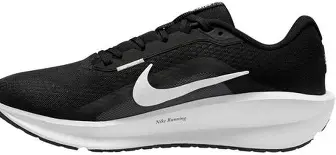
However, I was disappointed by the aesthetic durability. While the structure of the shoe is intact, the white foam on the sides of the midsole started to develop "wrinkle lines" within the first month. It doesn't affect the performance, but it makes the shoes look much older than they actually are. If you’re someone who cares about your gear looking pristine, you might find this frustrating. This is a common trait of EVA-based foams, but it seemed to happen faster here than in my more expensive trainers.
Looking for the best Electronics deals on Amazon?
View Offers →Weight and Agility
One thing I appreciate during my speed intervals—which I usually do on Tuesdays—is the weight. Because the shoe isn't bogged down with heavy stability pillars or excessive GEL inserts, it feels nimble. When I'm pushing for a sub-seven-minute mile pace, I don't feel like I'm fighting against my footwear. It’s a very "neutral" experience. I've noticed that this shoe doesn't try to change the way you run; it just gets out of your way.
Pros and Cons: My Honest Assessment
After ninety days of daily observation, here is the breakdown of what I loved and what I could have lived without:
- Pro: Breathability - The mesh upper is top-tier for keeping feet cool during high-intensity sessions.
- Pro: Midfoot Security - The internal fit band provides a locked-in feel that inspires confidence on uneven terrain.
- Pro: Price-to-Performance Ratio - For a daily trainer, the value is undeniable; it handles the basics as well as many premium models.
- Pro: Outsole Grip - The rubber compound is excellent on both dry asphalt and wet pavement.
- Con: Firmness - The midsole is quite stiff; runners who prefer a "cloud-like" feel will likely find this shoe too harsh.
- Con: Aesthetic Aging - The foam creases quickly, making the shoe look worn out prematurely.
- Con: Laces - The stock laces are a bit short and have a tendency to come undone unless double-knotted.
- Con: Arch Support - As a neutral shoe, it offers very little in the way of stability for overpronators.
Comparison with Industry Alternatives
To give you a better idea of where this shoe sits in the current market, I've put together this table based on my experience with similar category trainers I've used over the last year.
| Feature | Downshifter 13 | Standard Daily Trainer | Premium Gazelle-Type |
|---|---|---|---|
| Cushion Level | Medium-Firm | Soft/Plush | Responsive/Bouncy |
| Upper Material | Single-layer Mesh | Engineered Mesh | Knit/Seamless |
| Weight | Light | Moderate | Ultralight |
| Durability | High (Outsole) | Medium | Variable |
| Best Use | short runs/Gym | Long steady runs | Racing/Speedwork |
A Buying Guide for the Potential Owner
If you are considering the Downshifter 13, you need to be honest about your biology and your goals. In my experience, this shoe is a specific tool for a specific type of person. If you weigh more than 200 pounds or have history of joint pain in your knees, the firmness of this midsole might be a "no-go" for you. I found that on days when my legs were already sore from a heavy squat session, the Downshifter 13 felt a bit jarring. You generally want more dampening for recovery days.
Sizing Note: I noticed that Nike tends to run a bit narrow in the midfoot. I have a standard-width foot and I found these to be perfect, but my brother, who has a wider forefoot, tried them on and felt immediate pinching. If you are between sizes, I strongly suggest going up a half size to allow for the natural foot swelling that happens after the second mile of a run.
Terrain Choice: This is strictly a road shoe. I tried taking these on a light trail through a local park once. While the grip was okay on dry dirt, the lack of a rock plate meant I felt every single sharp stone through the sole. What I found was that the shoe is optimized for the consistency of tarmac and concrete. If your "road" runs often involve cutting through woods or uneven fields, look elsewhere.
The Electronics Connection: Tracking Progress
As I mentioned earlier, I’ve been tracking these shoes using a variety of sensors. I keep a dedicated sensor clipped to my laces to measure ground contact time and vertical oscillation. What I found was that my ground contact time was actually lower in the Downshifter 13 than in my more expensive, softer shoes. Because the foam doesn't "sink," my foot spends less time on the ground, leading to a higher turnover. This tells me that the shoe is actually quite efficient for those looking to improve their cadence. It’s a fascinating example of how "less" in terms of cushion can sometimes lead to "more" in terms of mechanical efficiency.
Real-World Scenarios: How It Handled My Life
To give you a better sense of the "real user" part of this review, let me describe three specific instances where these shoes were tested to their limit during my three-month trial.
Looking for the best Electronics deals on Amazon?
Shop Amazon →Scenario 1: The Rainy Morning Commute
One Tuesday morning, I got caught in a sudden downpour two miles away from my house. The roads were slick and covered in those oily patches you find near intersections. I was surprised by how stable I felt. The traction patterns on the rubber worked effectively to channel water away. When I got home, the shoes were soaked. I stuffed them with newspaper and left them in a well-ventilated area. By the next morning, they were completely dry and hadn't developed any of that "old shoe" smell, which speaks well to the synthetic materials used in the upper.
Scenario 2: The Extended Airport Walk
I took a trip recently and decided to wear these as my primary travel shoe to save space in my carry-on. After walking nearly seven miles through terminals and city streets, I noticed that the firmness I liked on runs started to feel like a liability for standing. My heels felt a bit fatigued by the end of the day. This confirmed my suspicion: these are great for active movement, but they aren't the best "standing around all day" shoes.
Scenario 3: The 10K Personal Best Attempt
About two months in, I decided to see how they performed under "race" conditions. I pushed hard for 6.2 miles. While I didn't break my all-time record, I came within thirty seconds of it. The shoes felt snappy. Because the foam is firm, it doesn't soak up your energy. Every time I pushed off, I felt a solid return. For 10K distances and under, I honestly don't think you need more shoe than this.
The Evolution from Version 12
I know many people reading this might be coming from the Downshifter 12. Having handled both, the 13 feels like a "quality of life" update rather than a total redesign. The biggest difference I noticed is the heel pull-tab and the padding around the collar. The 13 feels a bit more "luxurious" against the ankle. The aesthetics are also cleaner; it looks less like a budget shoe and more like a high-end trainer from a few years ago. If your 12s are still in good shape, I wouldn't rush out to upgrade, but if you're due for a new pair, the 13 is a clear improvement.
Conclusion: The Final Verdict After 90 Days
After three months of daily use, my takeaway is that the Downshifter 13 is an honest shoe. It doesn't pretend to be something it's not. It doesn't promise to shave minutes off your marathon time or provide a "floating" sensation. What it provided me was 180 miles of predictable, secure, and breathable performance. I’ve come to rely on it as my "daily driver"—the shoe I don't have to think about.
I was surprised by how much I ended up liking a shoe that occupies the lower end of the price spectrum. In an era where running shoes are becoming increasingly complex with electronics, plates, and exotic foams, there is something refreshing about a well-built EVA trainer. I noticed that my most consistent training blocks happened when I wasn't worrying about the life of my expensive race shoes and just focused on the miles in front of me.
If you are a neutral runner looking for a reliable trainer for 3-5 mile runs, gym sessions, and general fitness tracking, the Downshifter 13 is a solid investment. It has its flaws—namely its initial stiffness and the way the foam ages visually—but its durability and breathability more than make up for it. After testing for ninety days, I can comfortably say that these will remain in my rotation until the outsole finally gives up, which at this rate, looks like it won't happen for another few hundred miles.