Biggest The Terrace Buying Mistakes (And How to Avoid Them)
The Terrace is one of the better-known outdoor televisions on the market, designed to bring living-room-quality 4K pictures to patios, pool decks, and restaurant terraces. Yet even experienced buyers make predictable mistakes when selecting and installing an outdoor TV. This article examines common pitfalls people encounter with The Terrace, analyzes its strengths and trade‑offs, and gives practical, real‑world guidance that helps buyers avoid regrets.
Introduction: Why The Terrace attracts outdoor-TV buyers
Outdoor TVs are a different category than indoor sets. They are built for environmental exposure, higher ambient light, and different audio/installation needs. The Terrace appeals because it combines a 4K QLED image engine with weather‑resistant design and a mainstream smart TV platform, making it an obvious choice for homeowners and businesses that want a reliable, premium outdoor viewing solution without custom enclosures.
However, the purchase and installation process has many small decisions that compound into big problems if treated casually. Buyers often focus on brand and screen size while overlooking brightness, mounting, ventilation, cabling, warranty limitations, acoustic needs, and how the TV will actually sit in the intended viewing environment. The rest of this article digs into those issues and offers concrete steps to avoid them.
Product analysis: What The Terrace gets right (and where it requires planning)
Design and construction. The Terrace is purpose-built for outdoor use: it uses a sealed chassis and weather‑resistant materials, and it’s available in common large sizes that are useful at a distance. The TV’s external rating and sealed connections are far better than simply putting an indoor TV in a weatherproof box, and that alone removes many risk factors for outdoor installations.
Picture quality and daylight visibility. The Terrace uses an enhanced panel and processing tuned for bright, high‑contrast viewing. That makes it far more usable in partial sun or open shade than a typical indoor set. In practice, buyers find it provides clear HDR detail and good color when mounted under a covered pergola or on a shaded wall.
Smart platform and ecosystem. Running Samsung’s smart TV software means familiar streaming apps, wireless connectivity, and ecosystem compatibility for households already invested in Samsung devices. This reduces friction for streaming and control, and it simplifies pairing with existing home AV equipment.
Acoustics and outdoor sound. Built‑in speakers on outdoor TVs are usually tuned to carry in open spaces, but they have limits. Many owners pair The Terrace with an outdoor‑rated soundbar or a distributed speaker system for patio parties and ambient background music.
Installation readiness. The Terrace supports standard mounting hardware, and compatible outdoor mounts exist for swivel/tilt adjustment. Still, careful planning is essential for cable routing, weather‑proof power, and ventilation clearance around the set.
Where buyers typically underestimate the challenge
- Sun exposure and reflections: Even an outdoor TV built for brightness can struggle if mounted in direct, mid‑day sun without an overhang or shade.
- Heat and ventilation: Heat buildup behind the TV — especially on a dark siding — reduces component life. Ventilation and airflow matter.
- Cabling and power protection: Weather‑rated cabling, GFCI‑protected outdoor circuits, and surge protection are often ignored until there is a problem.
- Audio expectations: Buyers assume built‑in speakers will suffice for large outdoor gatherings; they frequently do not.
- Warranty and maintenance: Some assume the TV is maintenance‑free; regular cleaning, seasonal inspections, and understanding the warranty’s outdoor terms are important.
Common buying mistakes and how to avoid them
Mistake 1 — Choosing the wrong viewing size and distance
Many buyers equate “bigger is better” without considering the viewing distance on a patio. An oversized screen close to seating can cause eye fatigue; a screen that’s too small will be unreadable at a distance. The Terrace is available in several sizes — choose with typical outdoor seating distances in mind and remember that outdoor viewing often needs a slightly larger screen than indoors.
Mistake 2 — Ignoring direct sun and reflections
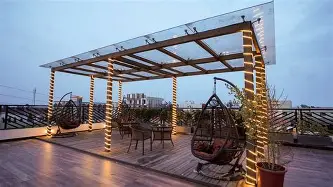
Even weather‑resistant screens suffer from glare. The Terrace includes anti‑reflective measures and increased brightness, but it performs best when positioned under shade or a partial cover. Prioritize mounting locations that are shaded during peak viewing hours, or plan structural shading (awnings, pergolas) rather than relying solely on the TV’s brightness.
Mistake 3 — Underestimating mounting, cables, and power needs
Installing outdoors requires weatherproof power receptacles, GFCI circuits, and UV‑resistant HDMI/network cables. Avoid running cables exposed across the siding; use conduit or run them internally where possible. Hire a licensed electrician for outdoor circuits rather than improvising with extension cords.
Shop the latest TVs & Home Theater picks on Amazon.
Browse Now →Mistake 4 — Expecting indoor audio performance outdoors
Outdoor acoustics are different: sound dissipates faster, and wind or pool noise competes with dialogue. Plan for supplemental outdoor speakers or an outdoor-rated soundbar if the TV will be used for group viewing or ambient music.
Mistake 5 — Skipping warranty and service research
Not all warranties cover environmental damage or accidental water ingress after installation. Read the warranty carefully and keep documentation of professional installation. Consider extended coverage if available and check service center accessibility in the buyer’s region.
Pros & Cons
Pros
- Purpose‑built for outdoor environments—sealed chassis and weather‑resistant materials
- 4K QLED picture quality tuned for brighter, high‑contrast viewing
- Familiar smart platform with mainstream streaming app support
- Available in sizes suitable for patios and commercial terraces
- Standard mounting options and compatibility with outdoor AV accessories
Cons
- Higher cost than equivalent indoor TVs — outdoor reliability comes at a premium
- Built‑in speakers may be insufficient for large or noisy outdoor spaces
- Requires professional installation for power and cabling to be fully weatherproof
- Direct sun and heat can still impact visibility and longevity if mounting is poorly planned
- Warranty terms and service networks vary by region — buyers must verify specifics
Comparison table: The Terrace vs alternatives
| Feature | The Terrace (outdoor QLED) | Indoor 4K QLED | Dedicated outdoor TV (e.g., Sun‑style models) |
|---|---|---|---|
| Environmental rating | Weather‑resistant, sealed design | Not weather‑rated — designed for interior use | Fully outdoor‑rated, often higher ingress protection |
| Brightness & anti‑glare | Enhanced brightness and anti‑reflective treatment | Lower brightness; susceptible to glare | High brightness plus outdoor anti‑glare treatments |
| Smart platform | Integrated smart OS (familiar streaming apps) | Integrated smart OS | Varies — some models include smart features, others are basic |
| Audio | Built‑in outdoor‑tuned speakers; often best with external audio | Indoor‑tuned speakers; poor outdoors | Often includes outdoor speaker options or easy integration |
| Installation complexity | Moderate — specialized mounts and weatherproof wiring recommended | Low — plug into indoor outlets | High — may require professional mounting and site prep |
| Typical use cases | Residential patios, covered decks, commercial terraces | Living rooms, bedrooms | Exposed patios, poolside, commercial outdoor venues |
Buying guide: How to choose and avoid regret
The following checklist walks through the most important considerations when buying The Terrace or a comparable outdoor TV.
1. Define the location and light conditions
Map the intended mounting spot and observe it at different times of day. If the screen will face direct sunlight during typical viewing times, plan for shading (permanent overhang, umbrella, or pergola) or pick a location away from direct sun. Note how reflections from glass doors or bright siding affect visibility.
2. Measure viewing distances and choose size accordingly
Measure typical seating distances and choose a size that supports comfortable viewing. For 4K panels, a larger screen becomes more useful outdoors where viewers are farther away; use the viewing distance to determine whether a 55", 65", or 75" model is appropriate.
3. Check the environmental rating and warranty
Confirm the TV’s weather rating and read warranty fine print about outdoor use. Verify whether the warranty covers moisture ingress, corrosion, or outdoor‑related failures, and whether professional installation voids or supports warranty claims.
4. Plan power and cabling professionally
Hire a licensed electrician to add outdoor‑rated outlets and GFCI protection. Use conduit for HDMI and network cabling or select outdoor‑rated cables. Lockable weatherproof junction boxes and proper strain relief at mount points are inexpensive safeguards that last.
5. Consider audio requirements
Decide whether the built‑in speakers will suffice. For typical backyard parties, an outdoor soundbar or distributed speakers will dramatically improve dialogue clarity and music performance.
6. Choose the right mount and allow airflow
Pick an outdoor‑rated mount with tilt and swivel capability that also permits a small air gap behind the TV for convection. Avoid flush mounts that trap heat and impede cooling. Verify that the mount and fasteners are rated for the wind and load conditions at the site.
7. Account for maintenance and cleaning
Plan a simple maintenance routine: periodic cleaning with non‑abrasive cloths, inspection of seals and cable glands, and seasonal checks for corrosion. Keep the owner’s manual and model number handy for firmware updates and service inquiries.
Find top-rated TVs & Home Theater products at great prices.
Shop Amazon →8. Think about security and theft prevention
Outdoor electronics are targets. Consider lockable mounting plates, security fasteners, discrete cable routing, and insurance coverage for outdoor equipment. For commercial installations, plan for camera surveillance or tamper alarms.
9. Verify streaming and connectivity needs
Make sure the TV’s smart platform supports the streaming services and apps the household uses. Check network reliability outdoors — a weatherproof Ethernet run or a strong Wi‑Fi outdoor access point improves streaming stability.
10. Budget realistically for total installed cost
Include the TV price, professional installation, dedicated outdoor power, weatherproof cabling, additional speakers, mounts, and any cabinetry or shading structure. Upfront investment in proper installation reduces replacement and repair costs later.
Real‑world use cases and considerations
Poolside family movie nights: Families place The Terrace under a shaded pergola near seating and supplement audio with an outdoor soundbar. They prioritize a larger screen and network reliability for streaming movies while keeping the TV several feet back from splash zones.
Backyard sports viewing: For weekend games, owners mount the TV for optimal sightlines from multiple seating areas. Mobility is important for some—portable outdoor TV carts or swivel mounts can allow turning the screen toward different groups.
Restaurant and hospitality terraces: Businesses choose weather‑rated sets for full‑day exposure and often pair the TV with commercial audio systems. They add protective overhangs, lockable mounts, and scheduled maintenance to ensure uptime and compliance with local codes.
Seasonal storage vs permanent installation: In very cold or storm‑prone climates some buyers opt to remove and store the TV for winter; others install it permanently with extra reinforcement and severe‑weather preparation. The best choice depends on local weather and how often the screen is used through the year.
Final recommendations: Practical ways to avoid the biggest mistakes
- Scout and measure before buying: verify sun angles, seating distances, and mounting feasibility.
- Budget for installation and accessories: include electrician, weatherproof cables, mount, and supplemental audio in the purchase decision.
- Use professional installers for power and mounting: this protects warranty validity and reduces chances of water ingress or poor electrical hookups.
- Add shading and airflow: a little structural shade and a small ventilation gap behind the TV yield big returns in visibility and longevity.
- Plan audio early: decide on a soundbar or speakers before purchase so the mount and cabling can accommodate them cleanly.
- Read the warranty and register the product: understand what is and isn’t covered for outdoor use, and save proof of professional installation if required.
Conclusion
The Terrace is a strong choice for buyers who want an accessible, purpose‑built outdoor television. Its weather‑resistant design, 4K picture quality, and familiar smart platform address many of the problems that plague casual outdoor installations. That said, the product is only part of the equation: poor siting, inadequate shading, substandard cabling, or neglecting audio needs quickly turn a good purchase into a frustrating experience.
Success with The Terrace comes from treating the installation like a systems project rather than a single appliance purchase. Measure the space, plan power and cabling, protect the investment with proper mounting and shading, and choose audio that fills the outdoor environment. Doing so avoids the common mistakes many buyers make and delivers the outdoor entertainment experience The Terrace is designed to provide.